"We should never despair, our Situation before has been unpromising and has changed for the better, so I trust, it will again. If new difficulties arise, we must only put forth new Exertions and proportion our Efforts to the exigency of the times." --George Washington
Tuesday, 4 November 2008, is a date which will live in infamy. While most presidential elections are followed with calls for unity by both candidates, Barack Obama issued no such call in his speech last night, with the possible exception of his observation, "I may not have won your vote tonight, but ... I will be your president, too."
Of course, none was expected -- liberals have elected a Socialist with deep ties to cultural and ethnocentric radicalism, and his executive and legislative agenda poses a greater threat to American liberty than that of any president in the history of our great republic.
Obama has twice taken an oath to "support and defend the Constitution of the United States against all enemies, foreign and domestic" and to "bear true faith and allegiance to the same."
He has never honored that oath, and, based on his policy proposals and objectives, he has no intention to honor it after again reciting that oath on 20 January 2009. Obama seeks to, in his own words, "break free from the essential constraints that were placed by the Founding Fathers in the Constitution."
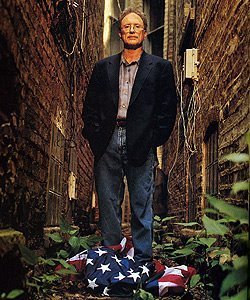
For that reason, this morning, the symbol of our national heritage of liberty, the American flag atop the 35-foot mast at our editorial offices (The Patriot Post), was respectfully lowered, inverted, and raised to full mast as a sign of national distress. It will remain inverted until next Tuesday, when we right it in honor of Veterans Day.
Today, at least 55,805,197 Americans are concerned for the future of our nation's great tradition of liberty. Some 63,007,791 Americans have been lulled, under the aegis of "hope and change," into a state of what is best described as "cult worship" and all its attendant deception.
One of our editors, a Marine now working in the private sector, summed up our circumstances with this situation report. It aptly captured the sentiments around our office:
"It's been tough, fellow Patriots; tough to stomach the idea that more than half of my fellow citizens who vote, have booted a genuine American hero to the curb for a rudderless charlatan.
What a sad indictment on our citizenry that some are so eager to overlook his myriad flaws -- his radical roots, his extreme liberalism, his utter lack of experience or achievement.
Barack Obama is the antithesis of King's dream: He's a man judged by the color of his skin rather than the content of his character.
If it's God's will that Barack Obama is our next president, then so be it. We Patriots will pick ourselves up, dust ourselves off, and wade back to the war front, intent on liberty or death."
This battle is lost, but the war is not. Let's roll.
Mark Alexander, Publisher
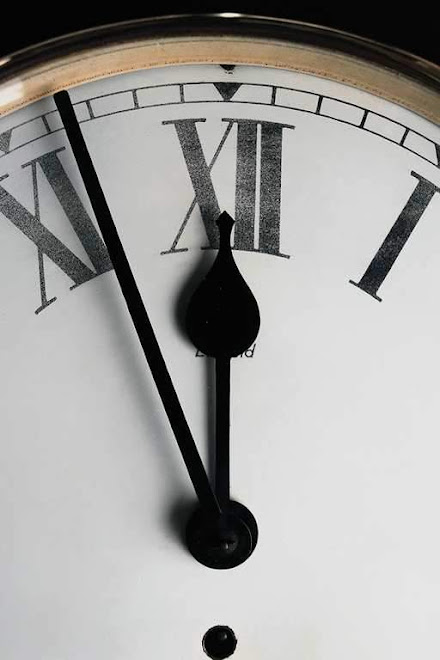
UPRIGHT
"Ok. It was a bad night. It wasn't the blow-out the Democrats were hoping for, but it was plenty bad enough." --Rich Galen
"I come to this moment of national decision with deep concerns about the next president. [Barack Obama's] victory is likely to unleash an ideological and vengeful Democratic Congress." --Michael Gerson
"Obama ... talks less and less about bipartisanship, his calling card during his earlier messianic stage. He does not need to. [Obama now has] large Democratic majorities in both houses. And unlike Clinton in 1992, Obama is no centrist." --Charles Krauthammer
"'E Pluribus Unum' is no longer our national motto. These three words are: 'Do For Me.' As in: What will the government do for me?" --Michelle Malkin
"Politicians have immense power to do harm to the economy. But they have very little power to do good." --Walter Williams
"Most change in America doesn't come from politicians. It comes from people inventing things and creating. The telephone, the telegraph, the computer, all those things didn't come from government. Our world is going to get better and better, as long as we keep the politicians from screwing it up." --David Boaz
"Conservatism always has been and always will be a force to reckon with because it most closely approximates the reality of the human condition, based, as it is, on the cumulative judgment and experience of a people. It is the heir, not the apostate, to the accumulated wisdom, morality and faith of the people. ... Our challenge is not to retreat to the comfort of self-congratulatory exile but to sweat and bleed -- and be victorious -- in the arena of public opinion." --Tony Blankley
WE DEPEND ON YOU!
"Liberty must at all hazards be supported. We have a right to it, derived from our Maker. But if we had not, our fathers have earned and bought it for us, at the expense of their ease, their estates, their pleasure, and their blood." --John Adams
Readers, our 2008 Annual Fund support campaign is under way. Our team of writers, editors and support staff depend on your financial support so that we may continue to offer The Patriot Post, free of charge, to countless thousands of our military, collegiate and mission field readers.
"I have been reading The Patriot since its inception as 'The Federalist' back in 1996, and have been an avid supporter all along. It has been an excellent resource and encouragement during my years on active duty. Thank you for your outreach to all uniformed Patriots in our Armed Services, and God bless you and your staff." --Raleigh, North Carolina
As with other mission-based, donor-supported organizations, we raise most of our budget in the last two months of each year. At latest accounting, we still must raise $335,420 before year's end.
If you have not already done so, please take a moment to support The Patriot's 2008 Annual Fund today with a secure online donation -- however large or small. If you prefer to support The Patriot by mail, please use our Donor Support Form.)
Every dollar you contribute provides a free subscription for someone serving our nation, or a young person who will fill a family, community and national leadership role in the next generation!
I thank you for the honor and privilege of serving you as editor and publisher of The Patriot. On behalf of your Patriot staff and National Advisory Committee, thank you and God bless you and your family!
Semper Vigilo, Fortis, Paratus, et Fidelis!
Mark Alexander
Publisher
EDITORIAL EXEGESIS
"The American electorate has handed [Barack Obama] and his fellow Democrats the kind of sweeping victory they haven't had since at least 1976 and in certain respects since 1964. We'll now find out if the Democratic Party has learned anything since the last two times it held all the levers of power in Washington. ... The economy was by far the dominant issue, and voters held GOP Members who belonged to the party in the White House responsible.
There's some injustice in this, because if anything Democratic policies have prevailed the past two years in Washington. But neither Mr. Bush nor John McCain made that case clearly to voters. The Democratic temptation will be to interpret this victory as a mandate for renewed liberal government. Republicans hope they do.
The last three times the Democrats won this kind of victory -- in 1964, 1976 and 1992 -- they overreached and suffered big losses two years later. ... Republicans can console themselves that soon Democrats won't have George W. Bush to kick around anymore. They'll now have to take responsibility if the economy stays in recession, or if Iraq turns chaotic again after an abrupt U.S. withdrawal. Americans have entrusted Democrats with what will essentially be unrestrained power, and we'll soon see if liberals have learned to govern." --The Wall Street Journal
INSIGHT
"Since our last meeting we have been through a disastrous election. It is easy for us to be discouraged, as pundits hail that election as a repudiation of our philosophy and even as a mandate of some kind or other. ... Bitter as it is to accept the results of the November election, we should have reason for some optimism. ...[I]t is possible we have been persuasive to a greater degree than we had ever realized. Few, if any, Democratic Party candidates in the last election ran as liberals. Listening to them I had the eerie feeling we were hearing reruns of [Barry] Goldwater speeches. I even thought I heard a few of my own." --Ronald Reagan
DEZINFORMATSIA
Adoring media: "It's not an overstatement to say that this is what the world wanted." --NBC's Dawna Friesen
Distractions?: "Look at how our attention was able to get pulled into pigs and lipstick and plumbers. We got a plumber who's the third member of the GOP ticket, in effect, and that's, it's all of our fault, yes, and there will be time to bloody our own backs with chains, but it's also the sorry state of our discourse as if, Tavis, we don't have enough serious issues to concentrate on. I think we may find out it was a movement year, we may find out we all had to step aside and just let it happen, and we may decide we went down too many rat holes of distractions on our way there." --NBC's Brian Williams
Unintelligible argument: "If you are hungry, you're not that interested in freedom of the press. If you are impoverished, you are interested in keeping yourself warm against the cold, and it's harder to think in Jeffersonian rights-of-man terms. Once those first two freedoms are secured, the others tend to follow. It's a very conservative argument that without order, nothing else is possible." --Newsweek editor John Meacham
When redistribution means keeping your own money: "For years, Republicans have argued that the way to help struggling working people is to give more money to the wealthy. Obama is saying that we should cut out the middleman and help working people directly. My hunch is that Obama's argument will prevail, and that conservatives will then work overtime to try to deny the judgment that the people have rendered." --Washington Post columnist E.J. Dionne
Fairly unbalanced:
"[Sarah Palin] brought out the crazy people. That's what the Republican base is. The Republican base are people who don't want the queers to get married. They don't want a woman to have a right to privacy. They want to do away with capital gains taxes, which has nothing whatsoever to do with their life. What Sarah Palin did was bring out the knuckle-draggers, the mouth-breathers..." --CNN's Mike Malloy
Too little, way too late: "I don't know what Barack Obama's worldview is. ... And do we know anything about the people who are advising him? ... He is principally known through his autobiography and through very aspirational [sic] speeches. ... What do we know about the heroes of Barack Obama? --PBS's Charlie Rose ++ "We don't know a lot about Barack Obama and the universe of his thinking about foreign policy. ... I don't know what books he's read. ... There's a lot about him we don't know. --NBC's Tom Brokaw
Sub Section: Newspulper Headlines: His Name Is Obama, You Racist Jerk!: "Where's Osama This Election?" --San Francisco Chronicle Web site
Where's Joe the Plumber When You Need Him?: "Obama Addresses Overflow Crowds" --U.S. News & World Report Web site
What Would We Do Without Attorneys?: "Attorney Says Killing, Beheading Not 'Normal'" --Associated Press
We Blame Global Warming: "Winter Comes Early for Spring Awakening" --CBC.ca
Everything Seemingly Is Spinning Out of Control: "Microsoft Says Next Windows Won't Be as Annoying" --Associated Press
News You Can Use: "Before Killing, Talk of a Shootout" --New Hampshire Union Leader
Bottom Stories of the Day: "Obama Thanks 'Gracious' Press" --Agence France-Presse (Thanks to The Wall Street Journal's James Taranto)
THE DEMO-GOGUES
Mourning in America: "If there is anyone out there who still doubts that America is a place where all things are possible, who still wonders if the dream of our founders is alive in our time, who still questions the power of our democracy, tonight is your answer. ... It's been a long time coming, but tonight, because of what we did on this date in this election at this defining moment change has come to America." --Barack Obama, declaring victory on Election Day
Redistributing wealth: "The reason that we want to do this, change our tax code, is not because I have anything against the rich. I love rich people! I want all of you to be rich. Go for it. That's the America dream, that's the American way, that's terrific. The point is, though, that -- and it's not just charity, it's not just that I want to help the middle class and working people who are trying to get in the middle class -- it's that when we actually make sure that everybody's got a shot -- when young people can all go to college, when everybody's got decent health care, when everybody's got a little more money at the end of the month -- then guess what? Everybody starts spending that money ... and everybody is better off. All boats rise. That's what happened in the 1990s, that's what we need to restore. And that's what I'm gonna do as president of the United States of America. John McCain and Sarah Palin they call this socialistic. You know I don't know when they decided they wanted to make a virtue out of selfishness." --Barack Obama
Bankrupting coal: "What I've said is that we would put a cap and trade system in place that is as aggressive, if not more aggressive, than anybody else's out there. ... So if somebody wants to build a coal-powered plant, they can; it's just that it will bankrupt them because they're going to be charged a huge sum for all that greenhouse gas that's being emitted." --Barack Obama in January in an interview with the San Francisco Chronicle -- the Chronicle spiked this part of the interview ++ "Under my plan of a cap and trade system, electricity rates would necessarily skyrocket. Even regardless of what I say about whether coal is good or bad. Because I'm capping greenhouse gases, coal power plants, you know, natural gas, you name it -- whatever the plants were, whatever the industry was, uh, they would have to retrofit their operations. That will cost money. They will pass that money on to consumers." --Barack Obama in the same interview
We can hardly wait: "I can't think of a time that I have been more excited at the prospect of change. ... It's issue after issue. I think we will have a better policy on Iraq. I think we will have a better policy on energy. I think we will have a better policy on immigration. I think we will have a better policy on education. I think we will have a better policy on health care. It's a huge list." --Sen. Chuck Schumer
VILLAGE IDIOTS
Barack Almighty: "There's this beautiful thing about my husband. He thinks he can really do anything -- he does. With his own power and will, he can fix it." --Michelle Obama on her all-powerful husband
Obama's election is just like a terrorist attack!: "I haven't seen this sense of unity since 9/11, really, really, and 9/11 was this tragic experience that brought us all together and now we're all brought together in the name of hope. Not since 9/11 have I experienced anything even kind of close to this." --Oprah Winfrey
Gun grabbers: "America should take notice thareasonable policies on guns are carrying the day. ... The gun issue has clearly lost its status as a 'wedge' issue in most places and most races." --Brady Campaign chief gun grabber Paul Helmke
Demos raise taxes: "As you know, whenever Democrats get in, taxes do go up. And if they go up and they work the way that Bill Clinton's tax plan worked, I'm okay with that. ... We want everybody to be able to go to the doctor. We want everybody to be able to do all the things they want to do -- then somebody's got to pay for it, and it's people making a lot of dough, and that's the way the American system has always been." --Whoopi Goldberg
Non Compos Mentis: "[T]he people of Iraq are not better off than they were before [the surge]. So before we start passing out too much credit, what we need is a success strategy for Iraq. We don't have one yet." --former presidential candidate Wesley Clark
Race bait: "Being a racist and a sexist was a good calling card for the Reagan administration." --Al Franken
SHORT CUTS
"Perhaps the biggest mystery of all is why anyone would want more money and more power in the hands of the federal government, which is really the basis of Obama's campaign." --Burt Prelutsky
"I want to invite Senator Obama because he needs to do something... He needs to do something about those skinny legs! We're gonna make him do some squats and then we're going to go give him some bicep curls to beef up the scrawny little arms. But if we only could do something about putting some meat on his ideas." --Arnold Schwarzenegger ++ "I disagree with Arnold Schwarzenegger about one thing. He said Obama needs to go out there and do some squats. He's already done squat! Barack Obama has done diddly-squat!" --Rush Limbaugh
"Barack Obama's staff pleaded for get-out-the-vote volunteers in Ohio, Florida and Pennsylvania. The memo said not to come if they're expecting a vacation, they should only come if they want to work. Look, if they wanted to work they wouldn't be Democrats." --Argus Hamilton
"According to recent news reports, Bill Clinton has now become an adviser to Barack Obama. Do you know who is really upset about this? Michelle Obama." --Jay Leno
Veritas vos Liberabit -- Semper Vigilo, Fortis, Paratus, et Fidelis! Mark Alexander, Publisher, for The Patriot's editors and staff. (Please pray for our Patriot Armed Forces standing in harm's way around the world, and for their families -- especially families of those fallen Soldiers, Sailors, Airmen, Marines and Coast Guardsmen, who granted their lives in defense of American liberty.)
http://PatriotPost.US
Showing posts with label Civil War. Show all posts
Showing posts with label Civil War. Show all posts
Thursday, November 6, 2008

Wednesday, November 5, 2008
"Slap Your Jaws And Force you to resent it." Nathan Bedford Forrest.
Nathan Bedford Forrest to his Commander, General Braxton Bragg
“Slap Your Jaws”
From author Jack Hurst's book on N.B. Forrest, recalling a conversation Forrest had with his commanding officer, General Bragg, surely one of the greatest retorts in American History. This ‘conversation’ took place at General Bragg’s headquarters above Chattanooga, Tennessee.
Forrest entered Bragg’s tent and refused to shake Bragg’s hand. Instead, Forrest stuck the index finger of his left hand into Braggs face and addressed him with frank insubordination.
"I am not here to pass civilities or compliments with you, but on other business.
“You commenced your cowardly and contemptible persecution of me soon after the battle of Shiloh, and you have kept it up ever since.
“You did it because I reported to Richmond facts, while you reported damned lies.
“You robbed me of my command in Kentucky and gave it to one of your favorites ---men that I armed and equipped from the enemies of our country -- in a spirit of revenge and spite, because I would not fawn upon you as others did.
“You drove me into West Tennessee in the winter of 1862 with a second brigade I had organized, with improper arms and without sufficient ammunition, although I had made repeated applications for the same. You did it to ruin me and my career.
“When in spite of all this I returned with my command well equipped by captures, you began again your work of spite and persecution and have kept it up; and now this second brigade, organized and equipped without thanks to you or the government, a brigade which has won a reputation for successful fighting second to none in the army, taking advantage of your position as the commanding general in order to humiliate me, you have taken these brave men from me.
“I have stood your meanness as long as I intend to. You have played the part of a damned scoundrel, and are a coward, and if you were any part of a man I would slap your jaws and force you to resent it.
“You may as well not issue any more orders to me, for I will not obey them, and I will hold you personally responsible for any further indignities you endeavor to inflict upon me. You have threatened to arrest me for not obeying your orders promptly. I dare you to do it, and I say to you that if you ever again try to interfere with me or cross my path it will be at the peril of your life."
Description of Forrest by a CSA infantryman:
“"A tall, lithe, straight figure with the look and tread of an Indian passed swiftly by me, his right arm extended and gesticulating energetically to his men, and his tongue 'keeping time to it,' in a loud, high, harsh voice, every accent full of a commanding will that made his men jump to obedience....Forrest was in full uniform, faded but complete, except the head gear. He wore a home-made, bell-crowned, low, black, beaver hat, wide brimmed. Not very pretty. No man had more right to care for appearances than he, noted Stephenson. Forrest was a handsome man with a face, figure, movement, and bearing that no one, once seeing, was apt to forget. You felt that he was a combination of enormous activity, endurance, and strength. That's what he was! Grace too! Forrest was no country gawk nor awkward man, as rough hewn self made men are apt to be." (1)
"In camp or off duty he was one of the mildest of men in manners and appearance. His voice was soft, his expression gentle, his eyes impassive. When angered, he was terrible, his face was awful to look upon. In battle his rage and excitement was like the frenzy of a madman. Yet the testimony is indisputable that never did he lose his head. His appalling excitement seemed to make his brain work clearer."(2)
In the American Civil War, the last war of great cavalry leaders, names like Stuart, Sheridan, Wheeler, Morgan, Hampton and Buford might come to mind. But the name Forrest seems to stand in a league all to his own. Labeled by some as the untutored genius of the war, Forrest had an unsurpassed record with 30 personal kills in combat. This record, combined with having 29 horses shot from under him during battle, indicates Forrest was never content to lead his men from the rear. With no formal military training, Forrest, like Lincoln and Andrew Jackson, earned his reputation with sheer audacity, instinct and ability.
Not only did he lack formal military training, but had very little formal education in his youth. Forrest was the eldest, and the head of seven brothers and three sisters. His father, a blacksmith, died while Forrest was still a young man, necessitating that he forego a formal education and help to raise the family. As a young business man, Forrest overcame his lack of schooling, entering the war as a private with an estimated wealth of a million and a half. During the war, he was an avid reader, scanning the newspapers daily to keep abreast of military information. His lack of education became most noticeable in his poor spelling and punctuation of personally written dispatches and reports. The words such as "skeer," "git" and "thar" were some examples. Described as urbane and polished in his mannerisms, most of the grammatical distortions in his speech were products of his staff officers and their leg-pulling tales of Forrest. However, in anger or excitement, his no nonsense approach to the English language would become evident. Once, having received a soldier's repeated request for leave, Forrest responded in writing: "I have told you twict goddamit No!"
On the march to Franklin on November 30th 1864, Rev. James McNeilly, Chaplain of Quarles' Brigade, overheard Forrest expressing his disgust over the Federals' escape at Spring Hill to General Walthall. "I saw General Forrest sitting alone on his horse, and I went near him. He seemed to be deeply moved, his face expressive of sorrow, anger and disgust. Directly, General Walthall rode up and saluted him, and then he gave expression to his words: "O General, if I had just one of your brigades, just one, to fling across the road, I could have taken the whole damn shebang."(3)
It was not only this Southern general's victories on the battlefield that made him one of the most colorful and written-about officers of the Civil War, but his eccentric and often controversial behavior ranked him alongside others of a similar nature, such as "Stonewall" Jackson, Bragg and Sherman. His Jekyll-and-Hyde personality made him an interesting study in postwar, and was commented often on by those who fought with him. No doubt his appearance and demeanor were intimidating to many of them. One of his troopers, Captain Dinkins, describes Forrest as being "..a magnetic man...a face that said to all the world: 'Out of my way; I'm coming!'...He was the handsomest man I ever knew." (4) Colonel D.C. Kelley observed Forrest in battle and commented: " The color of his face, which is normally olive or sallow, became flushed and red, not unlike that of a painted Indian Warrior; the eyes flashed with a look that suggested no mercy for any one who showed a disinclination to do promptly what he bid." Indeed, it has been said that Forrest would just as soon kill one of his own men for shirking from duty as an enemy. Forrest abhorred any display of cowardice. An example of this is recounted in John Wyeth's "Life of General Nathan Bedford Forrest."
After crossing the thirty-foot Sakatonchee bridge, under heavy enemy fire, Forrest came upon a frightened Confederate soldier "who, dismounted and hatless, had thrown away his gun and everything else that could impede his rapid flight to the rear." Chalmers, the First Division commander under Forrest, recalled that Forrest jumped down off of his horse, grabbed the frightened trooper, threw him to the ground, and then dragged him to the side of the road, where he began whipping him with a piece of brush. Then turning towards the gunfire, he said" 'Now, God Damn you, you go back there and fight. You might as well get killed there as here, for if you ever run away again you'll not get off so easy.'
Another example is recalled by Private Stephenson, at the battle of Murfreesboro in December of 1864. Forrest was temporarily commanding the infantry of Bate's Division, when the infantry broke and ran from the field in the face of a counterattack. "As we tore along, Forrest was striving to stop the panic. A man came running by breathlessly, hat off, hair flying, eyes bulging, the very picture of panic. His gun was already thrown away, his hands were fingering his belt to fling it and cartridge box off also. 'Halt,' yelled Forrest, leveling his revolver at him! 'Halt!' shouted Forrest again, for the man paid not a particle of attention to him. The half-crazed fellow looked up and kept on his way. Crack went Forrest's pistol, and the fellow pitched forward on his face!" (5)
While his eruptions of temper were feared by his men, they served under him with great loyalty and pride, as did his 16 yr. old son "Willie," who rode with him throughout the war. Most of the regulars of his command learned quickly of his quirks and made great effort to be the recipients of his praise. They also learned when to stay out of his way. Such is the case with one cavalry trooper who learned that lesson painfully. As was a habit of the cavalry general, he would at times analyze his options by walking in circles, his head bowed in concentration, his arms folded behind his back. Those who served under him for any length of time knew better than to interrupt this process. On this occasion in Middle Tennessee, the general was circling an outbuilding when a green trooper wished an audience with him. Each time Forrest made his circle around the building, the trooper would vainly try to get his attention. Upon the third time around, Forrest decided the trooper's persistence was a distraction to his thinking. Without so much as lifting his head, he swung his arm out and clipped the trooper on the jaw. Thereafter, Forrest would nonchalantly step over the prostrate trooper, while he continued his rounds.
Rare were the times that the softer and gentler nature of Forrest was witnessed. But they did indeed exist. It was said that the ferocious warrior on the battlefield was transformed in the presence of children and ladies. Like Robert E. Lee, Forrest delighted in a child's company and held a lifelong affection for youngsters. On the battlefield, his men caught a glimpse of the inner man when his youngest and favorite brother, Jeffrey Forrest was killed.
On February 22, in a running cavalry battle between Forrest and Union Cavalry Gen. William Smith, around Okolona Mississippi, Colonel Jeffrey Forrest was struck in the throat by a ball. "The general rushed to him, raised his head off the ground, and spoke his name several times, "melt[ing] with grief," artillerist Morton later recalled.
Of the many exploits, bold and daring feats that make Forrest the legendary character he is today, his attitude towards his superior officers, in particularly Gen. Braxton Bragg and Gen. Joseph Wheeler, are repeated often with amusement. In General Bragg's case, his seeming delight in purposely arousing Forrest with his petty behavior resulted in one of the most embarrassing moments of his career. For the second time, Bragg ordered Forrest to turn over the command he had worked hard to train to Gen. Wheeler. Riding to his commander's tent, Forrest minced few words with him. "..I have stood your meanness as long as I intend to. You have played the part of a damned scoundrel, and are a coward, and if you were any part of a man I would slap your jaws and force you to resent it...I say to you that if you ever try to interfere with me or cross my path again it will be at the peril of your life." Bragg never muttered a word about the incident, nor sought charges against Forrest.
To General Wheeler, his words were softer in comparison. After an incident in Dover, Tennessee, in which Forrest lost 25 percent of his command under Wheeler's command, Forrest gave Wheeler an ultimatum. "..you've got to put one thing in that report to Bragg," he declared. "Tell him I'll be in my coffin before I'll fight again under your command." It has long been rumored that Hood was also a victim of Forrest's verbal abuse and threats, but there is no evidence to support this. It's safe to say that Forrest held little respect for General Hood during the 1864 Tennessee Campaign. Upon being ordered to join Hood's army by Beauregard, an incident took place that showed just how little. A directive from Hood was sent to Forrest to reduce the army's number of mules per wagon, and ordering all surplus to be turned over to the transportation quartermaster. When Forrest ignored the directive, a Major A. L. Landis paid him a visit. According to John Morton, Landis received this scalding reception: "Go back to your quarters, and don't you come here again or send anybody here again about mules. The order will not be obeyed and moreover, if [the quartermaster] bothers me any further about this matter, I'll come down to his office, tie his long legs into a double bowknot around his neck, and choke him to death with his own shins. It's a fool order anyway.... I whipped the enemy and captured every mule wagon and ambulance in my command; have not made requisition on the government for anything of the kind for two years, and my teams will go as they are or not at all." (6) Fortunately, despite personal likes, Hood placed the rearguard under Forrest's command and it saved the shattered Army of Tennessee from being destroyed on the retreat.
Forrest, the fighter, was a man with a natural instincts in warfare and possessed the killer instinct that intimidated his enemies so. This intimidation was a calculated ploy on the general's part, who often made sure the press accompanied him to embellish his audacity and skill on the battlefield. And when victory was accomplished, the enemy in retreat, Forrest continued to dog their trail relentlessly until both were exhausted. Often referred to as a raider, he proved his mettle in more than one large scale battle such as, Shiloh, Chickamauga and Franklin. What would also prove invaluable to the Confederate armies, was the fact that Forrest would often tie up as many as his own number or more to pursue him. Sherman, also considered a great strategist, said of Forrest; "..he had a genius for strategy which was original, and to me incomprehensible. There was no theory or art of war by which I could calculate with any degree of certainty what Forrest was up to. He always seemed to know what I was going to do next." (7)
Though Forrest admittedly concluded the South had lost the war eighteen months prior to it's official end, he continued to fight with the same determination and spirit right up to the surrender of his command at Cahaba on April 8th 1865. When the Mississippi Governor, Charles Clark and Isham Harris (exiled Governor of Tennessee) approached him to discuss joining unsurrendered Confederates in Texas, Forrest interrupted, "Men" he said, "you may all do as you damn please, but I'm a-going home...To make men fight under such circumstances would be nothing but murder. Any man who is favor of a further prosecution of this war is a fit subject for a lunatic asylum." (8)
And the great cavalry leader did just that, his fame firmly ensured to be written with bold strokes of the pen in our history books. As in his military career, Forrest continued to be surrounded by controversy for the remainder of his life. He continued to be active in civic and political events until his health declined prior to his death. On May 14, 1875 he presence was conspicuous at a reunion of the Seventh Cavalry in Covington. Requested to make a speech, he did so from horseback. "...Comrades, through the years of bloodshed and weary marches you were tried and true soldiers. So through the years of peace you have been good citizens, and now that we are again united under the old flag, I love it as I did in the days of my youth, and I feel sure that you love it also....It has been thought by some that our social reunions were wrong, and that they would be heralded to the North as an evidence that we were again ready to break out into civil war. But I think that they are right and proper, and we will show our countrymen by our conduct and dignity that brave soldiers are always good citizens and law-abiding and loyal people."(9)
On October 29th, 1877, the former President of the Confederate States, Jefferson Davis, came by to visit Forrest at his home in Bailey Springs. But by then Forrest had slipped so far he barely recognized Davis. At 7 p.m., the general breathed his last. Perhaps the most fitting epitaph were the words his friend, Minor Meriwether, was heard to tearfully say to his son Lee, "the man you just saw dying will never die. He will live in the memory of men who love patriotism, and who admire genius and daring." (10)
“Slap Your Jaws”
From author Jack Hurst's book on N.B. Forrest, recalling a conversation Forrest had with his commanding officer, General Bragg, surely one of the greatest retorts in American History. This ‘conversation’ took place at General Bragg’s headquarters above Chattanooga, Tennessee.
Forrest entered Bragg’s tent and refused to shake Bragg’s hand. Instead, Forrest stuck the index finger of his left hand into Braggs face and addressed him with frank insubordination.
"I am not here to pass civilities or compliments with you, but on other business.
“You commenced your cowardly and contemptible persecution of me soon after the battle of Shiloh, and you have kept it up ever since.
“You did it because I reported to Richmond facts, while you reported damned lies.
“You robbed me of my command in Kentucky and gave it to one of your favorites ---men that I armed and equipped from the enemies of our country -- in a spirit of revenge and spite, because I would not fawn upon you as others did.
“You drove me into West Tennessee in the winter of 1862 with a second brigade I had organized, with improper arms and without sufficient ammunition, although I had made repeated applications for the same. You did it to ruin me and my career.
“When in spite of all this I returned with my command well equipped by captures, you began again your work of spite and persecution and have kept it up; and now this second brigade, organized and equipped without thanks to you or the government, a brigade which has won a reputation for successful fighting second to none in the army, taking advantage of your position as the commanding general in order to humiliate me, you have taken these brave men from me.
“I have stood your meanness as long as I intend to. You have played the part of a damned scoundrel, and are a coward, and if you were any part of a man I would slap your jaws and force you to resent it.
“You may as well not issue any more orders to me, for I will not obey them, and I will hold you personally responsible for any further indignities you endeavor to inflict upon me. You have threatened to arrest me for not obeying your orders promptly. I dare you to do it, and I say to you that if you ever again try to interfere with me or cross my path it will be at the peril of your life."
Description of Forrest by a CSA infantryman:
“"A tall, lithe, straight figure with the look and tread of an Indian passed swiftly by me, his right arm extended and gesticulating energetically to his men, and his tongue 'keeping time to it,' in a loud, high, harsh voice, every accent full of a commanding will that made his men jump to obedience....Forrest was in full uniform, faded but complete, except the head gear. He wore a home-made, bell-crowned, low, black, beaver hat, wide brimmed. Not very pretty. No man had more right to care for appearances than he, noted Stephenson. Forrest was a handsome man with a face, figure, movement, and bearing that no one, once seeing, was apt to forget. You felt that he was a combination of enormous activity, endurance, and strength. That's what he was! Grace too! Forrest was no country gawk nor awkward man, as rough hewn self made men are apt to be." (1)
"In camp or off duty he was one of the mildest of men in manners and appearance. His voice was soft, his expression gentle, his eyes impassive. When angered, he was terrible, his face was awful to look upon. In battle his rage and excitement was like the frenzy of a madman. Yet the testimony is indisputable that never did he lose his head. His appalling excitement seemed to make his brain work clearer."(2)
In the American Civil War, the last war of great cavalry leaders, names like Stuart, Sheridan, Wheeler, Morgan, Hampton and Buford might come to mind. But the name Forrest seems to stand in a league all to his own. Labeled by some as the untutored genius of the war, Forrest had an unsurpassed record with 30 personal kills in combat. This record, combined with having 29 horses shot from under him during battle, indicates Forrest was never content to lead his men from the rear. With no formal military training, Forrest, like Lincoln and Andrew Jackson, earned his reputation with sheer audacity, instinct and ability.
Not only did he lack formal military training, but had very little formal education in his youth. Forrest was the eldest, and the head of seven brothers and three sisters. His father, a blacksmith, died while Forrest was still a young man, necessitating that he forego a formal education and help to raise the family. As a young business man, Forrest overcame his lack of schooling, entering the war as a private with an estimated wealth of a million and a half. During the war, he was an avid reader, scanning the newspapers daily to keep abreast of military information. His lack of education became most noticeable in his poor spelling and punctuation of personally written dispatches and reports. The words such as "skeer," "git" and "thar" were some examples. Described as urbane and polished in his mannerisms, most of the grammatical distortions in his speech were products of his staff officers and their leg-pulling tales of Forrest. However, in anger or excitement, his no nonsense approach to the English language would become evident. Once, having received a soldier's repeated request for leave, Forrest responded in writing: "I have told you twict goddamit No!"
On the march to Franklin on November 30th 1864, Rev. James McNeilly, Chaplain of Quarles' Brigade, overheard Forrest expressing his disgust over the Federals' escape at Spring Hill to General Walthall. "I saw General Forrest sitting alone on his horse, and I went near him. He seemed to be deeply moved, his face expressive of sorrow, anger and disgust. Directly, General Walthall rode up and saluted him, and then he gave expression to his words: "O General, if I had just one of your brigades, just one, to fling across the road, I could have taken the whole damn shebang."(3)
It was not only this Southern general's victories on the battlefield that made him one of the most colorful and written-about officers of the Civil War, but his eccentric and often controversial behavior ranked him alongside others of a similar nature, such as "Stonewall" Jackson, Bragg and Sherman. His Jekyll-and-Hyde personality made him an interesting study in postwar, and was commented often on by those who fought with him. No doubt his appearance and demeanor were intimidating to many of them. One of his troopers, Captain Dinkins, describes Forrest as being "..a magnetic man...a face that said to all the world: 'Out of my way; I'm coming!'...He was the handsomest man I ever knew." (4) Colonel D.C. Kelley observed Forrest in battle and commented: " The color of his face, which is normally olive or sallow, became flushed and red, not unlike that of a painted Indian Warrior; the eyes flashed with a look that suggested no mercy for any one who showed a disinclination to do promptly what he bid." Indeed, it has been said that Forrest would just as soon kill one of his own men for shirking from duty as an enemy. Forrest abhorred any display of cowardice. An example of this is recounted in John Wyeth's "Life of General Nathan Bedford Forrest."
After crossing the thirty-foot Sakatonchee bridge, under heavy enemy fire, Forrest came upon a frightened Confederate soldier "who, dismounted and hatless, had thrown away his gun and everything else that could impede his rapid flight to the rear." Chalmers, the First Division commander under Forrest, recalled that Forrest jumped down off of his horse, grabbed the frightened trooper, threw him to the ground, and then dragged him to the side of the road, where he began whipping him with a piece of brush. Then turning towards the gunfire, he said" 'Now, God Damn you, you go back there and fight. You might as well get killed there as here, for if you ever run away again you'll not get off so easy.'
Another example is recalled by Private Stephenson, at the battle of Murfreesboro in December of 1864. Forrest was temporarily commanding the infantry of Bate's Division, when the infantry broke and ran from the field in the face of a counterattack. "As we tore along, Forrest was striving to stop the panic. A man came running by breathlessly, hat off, hair flying, eyes bulging, the very picture of panic. His gun was already thrown away, his hands were fingering his belt to fling it and cartridge box off also. 'Halt,' yelled Forrest, leveling his revolver at him! 'Halt!' shouted Forrest again, for the man paid not a particle of attention to him. The half-crazed fellow looked up and kept on his way. Crack went Forrest's pistol, and the fellow pitched forward on his face!" (5)
While his eruptions of temper were feared by his men, they served under him with great loyalty and pride, as did his 16 yr. old son "Willie," who rode with him throughout the war. Most of the regulars of his command learned quickly of his quirks and made great effort to be the recipients of his praise. They also learned when to stay out of his way. Such is the case with one cavalry trooper who learned that lesson painfully. As was a habit of the cavalry general, he would at times analyze his options by walking in circles, his head bowed in concentration, his arms folded behind his back. Those who served under him for any length of time knew better than to interrupt this process. On this occasion in Middle Tennessee, the general was circling an outbuilding when a green trooper wished an audience with him. Each time Forrest made his circle around the building, the trooper would vainly try to get his attention. Upon the third time around, Forrest decided the trooper's persistence was a distraction to his thinking. Without so much as lifting his head, he swung his arm out and clipped the trooper on the jaw. Thereafter, Forrest would nonchalantly step over the prostrate trooper, while he continued his rounds.
Rare were the times that the softer and gentler nature of Forrest was witnessed. But they did indeed exist. It was said that the ferocious warrior on the battlefield was transformed in the presence of children and ladies. Like Robert E. Lee, Forrest delighted in a child's company and held a lifelong affection for youngsters. On the battlefield, his men caught a glimpse of the inner man when his youngest and favorite brother, Jeffrey Forrest was killed.
On February 22, in a running cavalry battle between Forrest and Union Cavalry Gen. William Smith, around Okolona Mississippi, Colonel Jeffrey Forrest was struck in the throat by a ball. "The general rushed to him, raised his head off the ground, and spoke his name several times, "melt[ing] with grief," artillerist Morton later recalled.
Of the many exploits, bold and daring feats that make Forrest the legendary character he is today, his attitude towards his superior officers, in particularly Gen. Braxton Bragg and Gen. Joseph Wheeler, are repeated often with amusement. In General Bragg's case, his seeming delight in purposely arousing Forrest with his petty behavior resulted in one of the most embarrassing moments of his career. For the second time, Bragg ordered Forrest to turn over the command he had worked hard to train to Gen. Wheeler. Riding to his commander's tent, Forrest minced few words with him. "..I have stood your meanness as long as I intend to. You have played the part of a damned scoundrel, and are a coward, and if you were any part of a man I would slap your jaws and force you to resent it...I say to you that if you ever try to interfere with me or cross my path again it will be at the peril of your life." Bragg never muttered a word about the incident, nor sought charges against Forrest.
To General Wheeler, his words were softer in comparison. After an incident in Dover, Tennessee, in which Forrest lost 25 percent of his command under Wheeler's command, Forrest gave Wheeler an ultimatum. "..you've got to put one thing in that report to Bragg," he declared. "Tell him I'll be in my coffin before I'll fight again under your command." It has long been rumored that Hood was also a victim of Forrest's verbal abuse and threats, but there is no evidence to support this. It's safe to say that Forrest held little respect for General Hood during the 1864 Tennessee Campaign. Upon being ordered to join Hood's army by Beauregard, an incident took place that showed just how little. A directive from Hood was sent to Forrest to reduce the army's number of mules per wagon, and ordering all surplus to be turned over to the transportation quartermaster. When Forrest ignored the directive, a Major A. L. Landis paid him a visit. According to John Morton, Landis received this scalding reception: "Go back to your quarters, and don't you come here again or send anybody here again about mules. The order will not be obeyed and moreover, if [the quartermaster] bothers me any further about this matter, I'll come down to his office, tie his long legs into a double bowknot around his neck, and choke him to death with his own shins. It's a fool order anyway.... I whipped the enemy and captured every mule wagon and ambulance in my command; have not made requisition on the government for anything of the kind for two years, and my teams will go as they are or not at all." (6) Fortunately, despite personal likes, Hood placed the rearguard under Forrest's command and it saved the shattered Army of Tennessee from being destroyed on the retreat.
Forrest, the fighter, was a man with a natural instincts in warfare and possessed the killer instinct that intimidated his enemies so. This intimidation was a calculated ploy on the general's part, who often made sure the press accompanied him to embellish his audacity and skill on the battlefield. And when victory was accomplished, the enemy in retreat, Forrest continued to dog their trail relentlessly until both were exhausted. Often referred to as a raider, he proved his mettle in more than one large scale battle such as, Shiloh, Chickamauga and Franklin. What would also prove invaluable to the Confederate armies, was the fact that Forrest would often tie up as many as his own number or more to pursue him. Sherman, also considered a great strategist, said of Forrest; "..he had a genius for strategy which was original, and to me incomprehensible. There was no theory or art of war by which I could calculate with any degree of certainty what Forrest was up to. He always seemed to know what I was going to do next." (7)
Though Forrest admittedly concluded the South had lost the war eighteen months prior to it's official end, he continued to fight with the same determination and spirit right up to the surrender of his command at Cahaba on April 8th 1865. When the Mississippi Governor, Charles Clark and Isham Harris (exiled Governor of Tennessee) approached him to discuss joining unsurrendered Confederates in Texas, Forrest interrupted, "Men" he said, "you may all do as you damn please, but I'm a-going home...To make men fight under such circumstances would be nothing but murder. Any man who is favor of a further prosecution of this war is a fit subject for a lunatic asylum." (8)
And the great cavalry leader did just that, his fame firmly ensured to be written with bold strokes of the pen in our history books. As in his military career, Forrest continued to be surrounded by controversy for the remainder of his life. He continued to be active in civic and political events until his health declined prior to his death. On May 14, 1875 he presence was conspicuous at a reunion of the Seventh Cavalry in Covington. Requested to make a speech, he did so from horseback. "...Comrades, through the years of bloodshed and weary marches you were tried and true soldiers. So through the years of peace you have been good citizens, and now that we are again united under the old flag, I love it as I did in the days of my youth, and I feel sure that you love it also....It has been thought by some that our social reunions were wrong, and that they would be heralded to the North as an evidence that we were again ready to break out into civil war. But I think that they are right and proper, and we will show our countrymen by our conduct and dignity that brave soldiers are always good citizens and law-abiding and loyal people."(9)
On October 29th, 1877, the former President of the Confederate States, Jefferson Davis, came by to visit Forrest at his home in Bailey Springs. But by then Forrest had slipped so far he barely recognized Davis. At 7 p.m., the general breathed his last. Perhaps the most fitting epitaph were the words his friend, Minor Meriwether, was heard to tearfully say to his son Lee, "the man you just saw dying will never die. He will live in the memory of men who love patriotism, and who admire genius and daring." (10)
Subscribe to:
Posts (Atom)